
AUU Basketball Season 2026: The Complete Jersey & Team Kit Checklist


If you're reading this, you're probably an AAU coach or team manager already buried in scheduling, tryout logistics, travel coordination, and parent group chats that never seem to stop buzzing. The last thing you need is one more item on your plate. But here's the thing — there's exactly one piece of prep work that, if left to the final 48 hours, will make your entire team look disorganized before a single possession is played. And that piece is the uniforms.
AAU basketball runs year-round now. Spring and summer are the tournament clusters where it all matters most, and late summer into early fall hosts another wave of regional qualifiers. The calendar doesn't give you a natural off-ramp. So let's get this sorted now — a single, complete reference for every kit-related decision you'll face this season, from compliance rules to sizing strategies to the one ordering workflow that'll save you from spreadsheet-induced burnout.
The AAU Landscape — Why Jersey Logistics Get Messy Fast
The AAU age structure alone tells you why this isn't like ordering for a single high school varsity squad. Divisions run from U6 all the way through U18. One club can field a dozen teams across that range. A single club director might be ordering uniforms for a 6-year-old in a Preschool size and an 18-year-old power forward in a 2XL, all in the same batch.
This is the bottleneck most team managers don't see coming. A supplier that can't cover that entire size spectrum forces you into split orders — two vendors, two production timelines, two sets of color-matching headaches. Before you even think about design and numbering, your first supplier question should be: "Do you carry Preschool through Adult 5XL, and do you guarantee color consistency across all sizes?"
A number of team basketball jerseys suppliers claim to cover youth and adult, but the real test is in the youth-to-adult transition zone — where a 14-year-old might be wearing a men's small and a 16-year-old teammate is still in a youth large. Color fidelity across those two size systems isn't automatic. It requires a manufacturer that runs the same dye lot across youth and adult production batches.
AAU Compliance Rules — What the Rulebook Actually Says
Before you design anything, you need to know what the tournament directors are checking at the scorer's table. AAU's national rulebook is the baseline, but individual tournament hosts can and do layer on additional requirements. Here's the minimum you must hit.
Number Sizing
The AAU rulebook specifies minimum number dimensions that are non-negotiable. Back numbers must be at least 4 inches (roughly 10 cm) in height. Front numbers — typically placed on the left or right chest — must be at least 2 inches (roughly 5 cm). If your numbers are smaller than these minimums, tournament officials have the authority to flag the uniform, and in some cases require a jersey swap before the player can enter the game. That's not a conversation you want to have at 8:00 AM before the first bracket game.
Numbers also need to be clearly legible from the scorer's table — which means high contrast against the jersey base color. A dark number on a dark body or light on light is going to cause problems, regardless of whether the size itself passes inspection.
Color Rules — Home, Away, and the Contrast Requirement
The standard across most AAU-sanctioned events is home team wears white (or a predominantly light-colored uniform) and away team wears a dark contrasting color. This isn't just tradition — it's a practical refereeing requirement. Officials need instant visual distinction between the two teams on the floor, especially in fast-break situations and under gym lighting conditions that can be less than ideal.
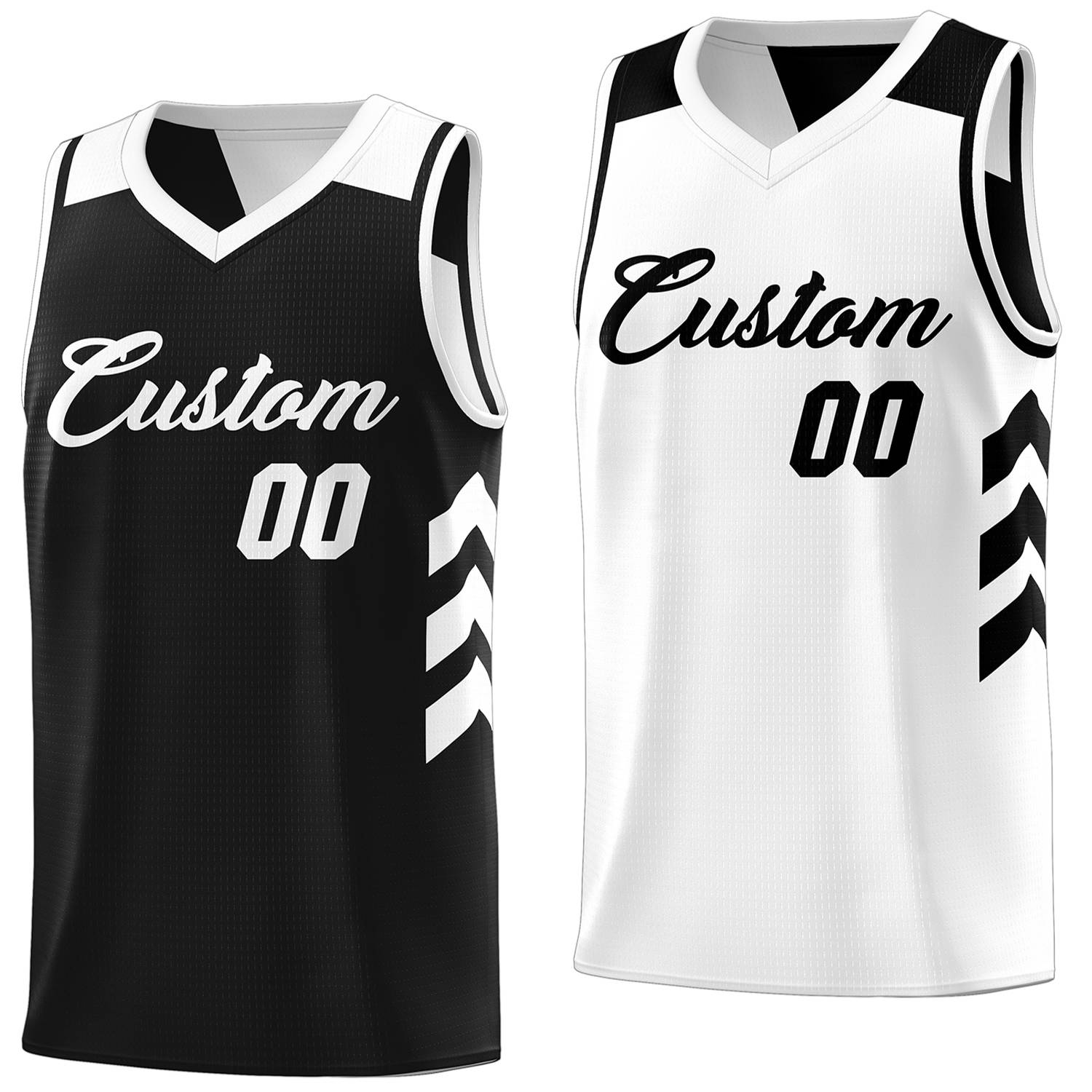
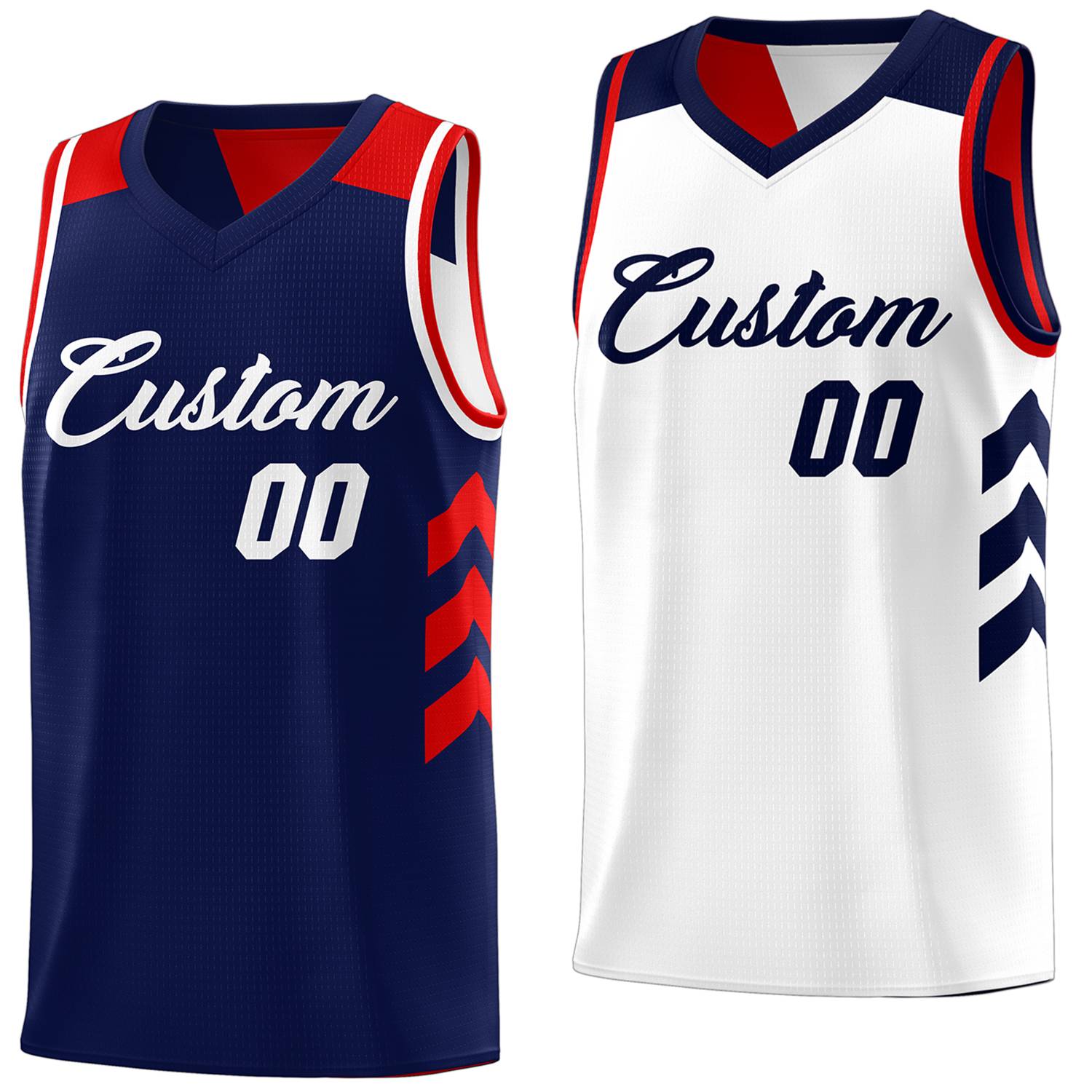
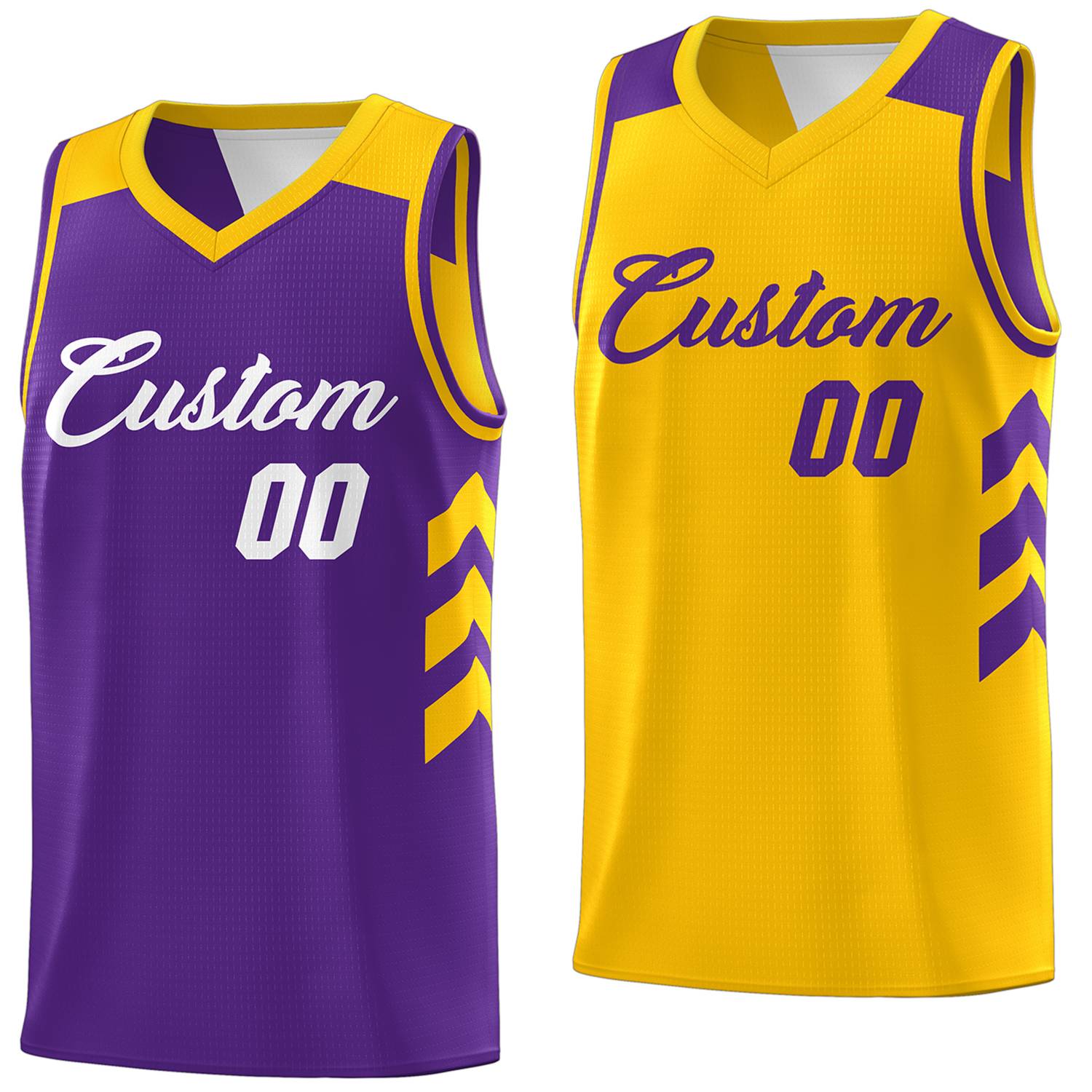
Practically speaking, your team needs access to both a light and a dark option. You can buy two separate sets, which doubles your per-player cost — or you can go with a reversible design, which is why reversible AAU basketball jerseys have become one of the most popular formats in the AAU circuit. More on that in the equipment checklist below.
Team Name Display
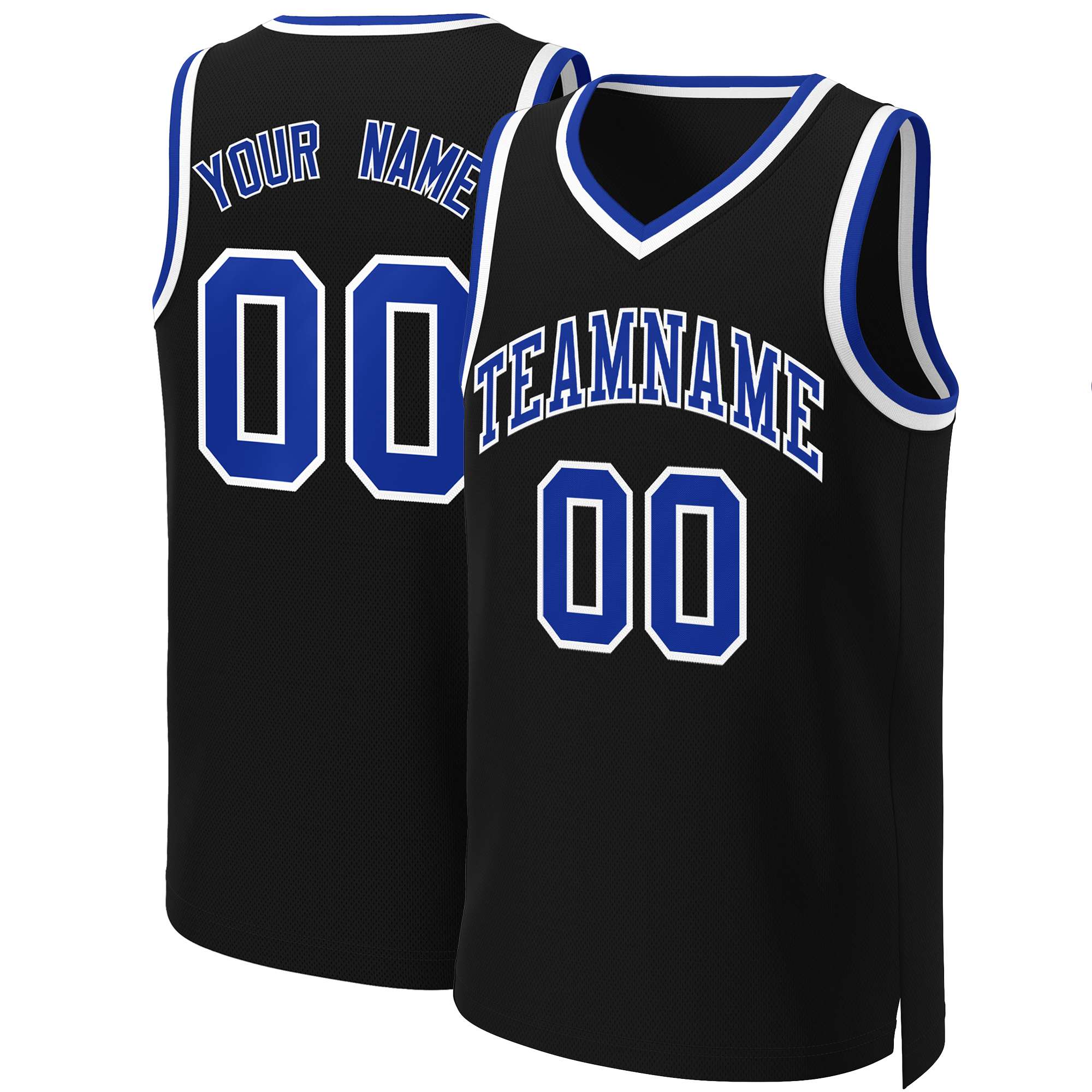
The team or club name must appear on the front of the jersey. This is spelled out in AAU uniform regulations and is one of the first things checked during pre-game uniform inspection. Placement can be centered across the chest or positioned above the number, but it must be the dominant front-facing text element aside from the number itself.
A Note on Tournament-Specific Variations
AAU publishes a standard rulebook, but specific events — especially national qualifiers and championship tournaments — may tighten requirements further. Some tournaments mandate exact number placement within a defined chest zone; others require the jersey to be tucked in at all times and will flag excessively long or oversized cuts. The safest move is to download the official rules packet for every tournament you're registering for and cross-check your uniform specs against it at least two weeks before the event. You'll catch issues while there's still time to fix them.
The Complete AAU Team Equipment Checklist
Here's the full inventory your team needs. Use it as a pre-season audit.
Game Uniforms
- Primary jersey + shorts — the core game uniform
- Secondary/away option — either a second full set or a reversible jersey that handles both colors
- Both sets must comply with number sizing and color contrast rules above
Warm-Up Gear
- Warm-up shirt or shooting shirt for pre-game — this is what evaluators, scouts, and tournament photographers see when your team walks in. A cohesive warm-up look signals organization and creates a strong first impression before the tip-off
- Warm-up pants or joggers (optional but recommended for winter tournaments in cold gyms)
Practice Apparel
- Practice jerseys or pinnies — kept separate from game uniforms to extend game jersey lifespan
- Practice shorts — these take the most abuse during drills; having dedicated practice sets preserves your game-day kits
Coach & Staff Gear
- Coach polo or quarter-zip — matching or complementary to team colors
- Coach jacket — for sideline consistency, especially in multi-game tournament days
This list is the minimum viable equipment package. It covers game-day compliance, pre-game presence, practice durability, and staff professionalism — four dimensions that, together, define how your club is perceived by opposing coaches, tournament directors, and families considering your program.
The Reversible Jersey — The AAU Standard, Explained
The reason reversible jerseys dominate AAU basketball is simple math. One jersey handles two color requirements. You wear white on one side for home games, flip it inside-out to dark for away matchups, and carry exactly one garment instead of two. For tournament weekends where your squad might play four or five games across two days, the laundry logistics alone make this worth it.
From a manufacturing standpoint, reversible youth basketball uniforms are built as a bonded double-layer construction — two full layers of fabric sewn together at the seams, creating a single reversible piece. The edges are finished with binding rather than a traditional hem, since both sides need to look clean when worn. This construction is heavier than a single-layer jersey (typically 200–240 GSM combined, versus 140–160 GSM for a standard single-layer basketball jersey), but the tradeoff is durability and convenience.
The key quality indicators for a well-made reversible jersey:
- Both sides use the same fabric weight, so the garment doesn't twist or drape unevenly
- The binding at the armholes and neckline lies flat regardless of which side is worn outward
- Numbering and lettering are sublimated into the fabric rather than heat-pressed on top — heat transfers on a reversible jersey create a stiffness point that eventually cracks along the fold line
If you're ordering reversible AAU basketball jerseys, confirm with your supplier that the numbering is sublimated, not transferred. This detail alone separates tournament-grade uniforms from budget options that won't survive a full season.

Sizing Across the Full AAU Age Spectrum
As mentioned earlier, AAU spans U6 through U18. A single club might order for kids in Preschool sizes and athletes wearing 2XL or larger. This creates a sizing coordination challenge that catches a lot of first-time team managers off guard.
The Problem Zone: Youth-to-Adult Transition
A 13-year-old in your U14 program might wear a youth XL; his 14-year-old teammate might already need a men's small. If your supplier runs separate youth and adult production lines (very common), there is a real risk of color variation between batches. The blue that looks perfect on the youth sizes might come out a shade darker on the adult run. This is especially noticeable in team photos and on video — and it's the kind of detail parents absolutely notice.
Solution: Single-Batch Production
Suppliers that run youth, adult, and Preschool sizes in a single production batch eliminate this problem entirely. The same dye lot is used across all sizes, guaranteeing color consistency from the smallest to the largest jersey. When you're evaluating uniform vendors, this is a specific, concrete question to ask. Not "can you do youth and adult?" — nearly everyone says yes to that. Ask: "Are all sizes produced in the same batch from a single dye lot?"
Girls, Boys, and Fit Options
For youth and teen players, standard straight-cut jerseys and shorts work well across genders — the cut is athletic without being restrictive, and mobility is the priority. For female players who prefer a more tailored silhouette, some suppliers offer a women's cut with a subtle waist taper and slightly adjusted armhole sizing. The difference is modest — this isn't a fashion cut, it's an athletic adjustment — but it makes a noticeable comfort difference for players who find the standard straight cut too boxy. In the team order form, simply designate which players want the women's cut alongside their size entry.
For the youngest age groups (U6 and U8), Preschool and youth small sizes with a standard relaxed cut give little players full mobility for the controlled chaos that is U8 basketball. These smallest sizes are often overlooked by uniform suppliers, so confirming Preschool availability upfront saves a last-minute scramble.
The Ordering Timeline — Work Backwards From Tournament Day
The single most common AAU uniform mistake is waiting for the final roster before starting the order. This seems responsible — you want to order exactly what you need — but it actually guarantees you'll be wearing practice pinnies on tournament weekend. Here's the math.
A standard custom uniform order follows this timeline:
- Design finalization: 5 to 7 days. This includes back-and-forth on mockups, color proofs, number placement confirmation, and logo positioning. Rushing this stage produces errors that are baked into every single jersey.
- Production: 10 to 14 days. Sublimation, cutting, sewing, quality inspection — this stage doesn't compress without sacrificing quality.
- Shipping: 5 to 10 days depending on your location and the shipping method. International production adds time; domestic runs faster but typically costs more.
Total: 4 to 5 weeks from design lock to delivery. Add a one-week buffer for the unexpected — a delayed shipment, a misprinted batch that needs a correction run, a roster change that requires an additional jersey — and you're looking at a 5-to-6-week lead time to be safe.
The smarter workflow is to treat uniforms as a seasonal purchase cycle independent of a specific tournament deadline. Order base quantities for expected roster sizes early. Then, as rosters finalize, place add-on orders for the specific names and numbers you need. As long as you're working with a supplier that guarantees color consistency in reorders, this approach eliminates the time-pressure panic without any downside.
The Team Ordering Workflow — One Spreadsheet Instead of Fifty Clicks
The standard consumer e-commerce experience — add to cart, select size, add to cart, select size, repeat for 12 players — is a terrible fit for team orders. It's slow, error-prone, and makes it impossible to see your full roster at a glance while you're placing the order.
The Spreadsheet Method
A proper team order flow uses a single spreadsheet or order form where you enter every player's details in one place:
- Player name (as it should appear on the jersey — check spelling twice)
- Jersey number (cross-reference with your roster to catch duplicates)
- Size (jersey and shorts, which may differ — a player might wear a medium jersey and large shorts)
- Gender designation (standard cut or women's cut)
- Quantity per item type (game jersey, practice jersey, warm-up)
Once submitted, the supplier should generate a consolidated order summary with per-player line items, total quantities, and a single invoice — not one charge per jersey added to a shopping cart. This consolidated approach also makes budget reporting straightforward; you hand the club treasurer a single invoice, not a stack of individual receipts.
Design Services and Proofs
Before production, you should receive free digital proofs showing exactly how each size variant will look — the same design on a youth small doesn't always render identically to the same design on an adult 2XL. Logos and numbers scale differently across size grades, and a proof that only shows one size is only showing you part of the story. Request proofs across at least three sizes (youth small, adult medium, adult XL) to catch any scaling issues before production starts.
FAQ — The Questions Every AAU Manager Asks
Q: Can we start the order before the roster is finalized?
Yes. At KXKSHOP, many teams begin the ordering process before their final roster is confirmed. You can lock in the jersey design, colors, logos, and sizing estimates first, then submit player names and numbers later before production begins. This allows our design team to complete the artwork and approval process while coaches finalize roster decisions, helping teams stay on schedule without delaying production.
Q: What if we need to add jerseys mid-season?
No problem. KXKSHOP supports reorder requests throughout the season and maintains design records for your team. If you need additional jerseys for new players, replacements, or coaching staff, we can produce matching jerseys using the same dye-sublimation process to ensure consistent colors, logos, and graphics. Since KXKSHOP has no minimum order quantity, you can reorder a single jersey or multiple uniforms as needed.
Q: How do we handle girls versus boys sizing in a co-ed program?
KXKSHOP offers a wide range of youth, men's, and women's sizes to accommodate players of all ages and body types. For most youth teams, standard youth sizing works well for both boys and girls. Players who prefer a more tailored fit may choose a women's cut, which features a slightly more contoured silhouette. Simply indicate each player's preferred size and fit during the ordering process, and our team will help ensure everyone receives the right jersey.
Q: What's the minimum order quantity?
Most custom jersey suppliers require a minimum order quantity of 6–10 jerseys per design. Since AAU rosters typically include 10–15 players, most teams can easily meet these requirements. Be sure to verify the minimum order quantity before placing your order.
KXKSHOP has no minimum order requirement. You can order a single custom jersey, a few jerseys for a small group, or a complete team uniform set. This flexibility makes it easy to purchase replacement jerseys, sample uniforms, or gear for teams of any size.
Q: Are the jerseys machine-washable?
Yes. All KXKSHOP jerseys are made from performance polyester and feature full dye-sublimation printing, meaning the colors and graphics become part of the fabric itself rather than sitting on top of it. This creates vibrant, long-lasting designs that resist cracking, peeling, and fading, even after repeated washes.
For best results, wash cold and turn the jersey inside out before washing. Avoid fabric softeners, which can affect moisture-wicking performance. Do not iron, as polyester is sensitive to high heat. To remove wrinkles, use a handheld steamer on a low setting or hang the jersey in a steamy bathroom.
The Bottom Line
AAU uniform ordering has exactly two failure modes: doing it too late, and doing it without a system. The first one is a calendar problem; the second is a process problem. Both are fixable.
Start your design conversation 5 to 6 weeks before your first tournament. Use a team order spreadsheet instead of manually carting individual items. Confirm that your supplier can produce youth and adult sizes in a single dye-lot batch and carries Preschool through adult extended sizes. Get proofs across multiple size grades. Lock the design early, add roster details later, and keep a buffer week in your timeline because something always shifts.
If you're looking for team basketball jerseys that meet AAU compliance, cover the full age range, and handle the logistical heavy lifting through a streamlined team ordering process — KXKSHOP runs exactly this workflow. Free design proofs, single-batch production across all sizes, a dedicated reversible basketball jersey line, and an order form that replaces cart juggling with a single spreadsheet submission.
Go design your kit. Leave the logistics to the people who do it every day.
→ Design Your AAU Team Jerseys at KXKSHOP.com
Leave a comment
Comments will be approved before showing up.
Also in News
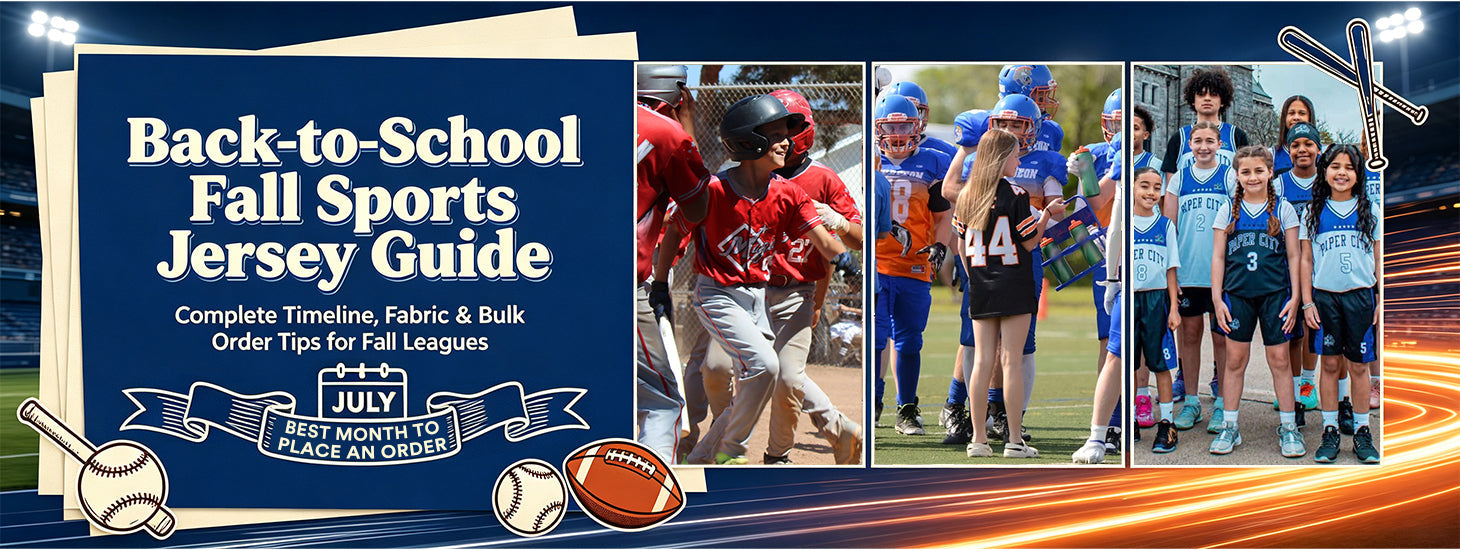

Back-to-School Sports Guide: How to Prepare Your Team with Custom Jerseys Before the Fall Season
Plan ahead for the fall sports season with KXK's complete jersey ordering guide. Discover why July is the best time to order, what features matter most in a team jersey, and how to get custom football jerseys, baseball uniforms, and warm-up hoodies with zero hassle. Free custom design, no MOQ, and factory-direct pricing—get your team game-ready today.
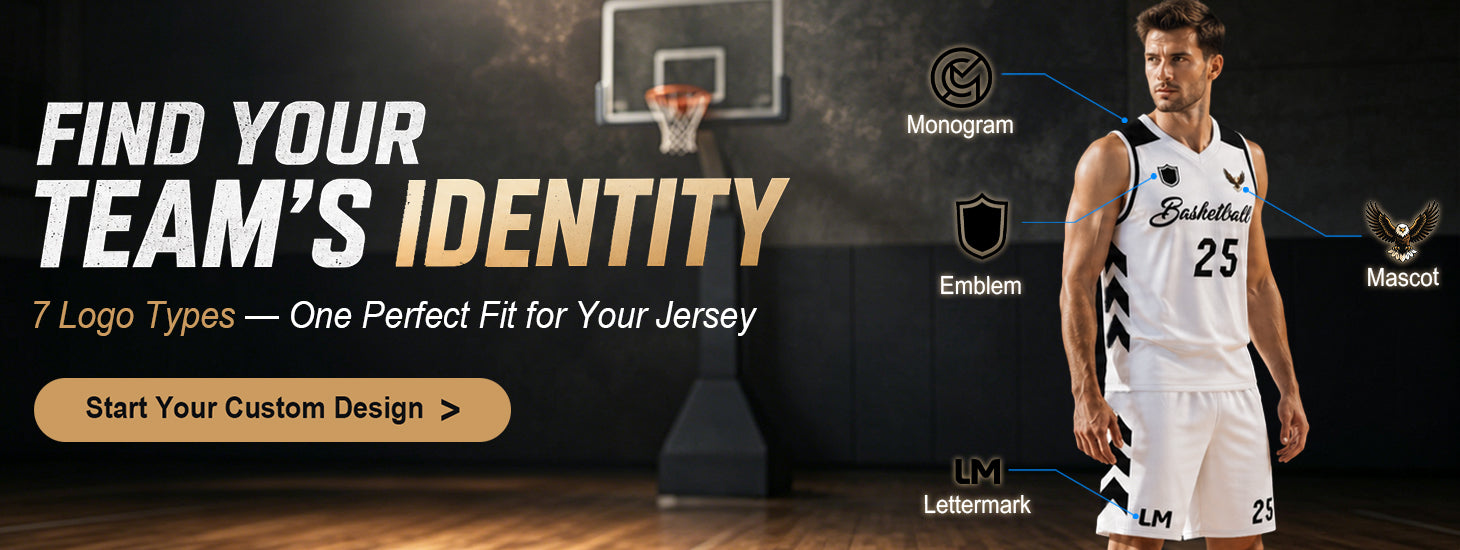

How to Design Your Logo: 7 Logo Types Explained (and Which One Actually Works on Custom Jerseys)
This article is a custom jersey purchasing decision guide for the US market, addressing a key user question: how to choose the most suitable logo from seven mainstream logo types for jersey printing.
The article starts with a common user misconception—"A logo that looks good on a computer screen might completely fail when printed on a jersey"—and then systematically compares the performance differences of seven logo types—Wordmark, Lettermark, Monogram, Mascot, Emblem, Abstract, and Combination Mark—in real-world printing scenarios. Each type is broken down into four dimensions: "Applicable Scenarios," "Advantages," "Failure Conditions," and "Printing Perspective"—and supplemented with scenario-specific decision-making guides for four typical user groups: school teams, sports clubs, youth teams, and modern brands.
The latter half of the article focuses on practical application: common design error warnings, file format standards, the complete process from design to production, and targeted FAQs. The overall structure is "problem recognition → type comparison → decision guide → practical preparation → action guidance", which helps teams avoid printing failures during the design stage, save time and costs, and ensure that the final product is clearly identifiable and professionally appealing on the field.
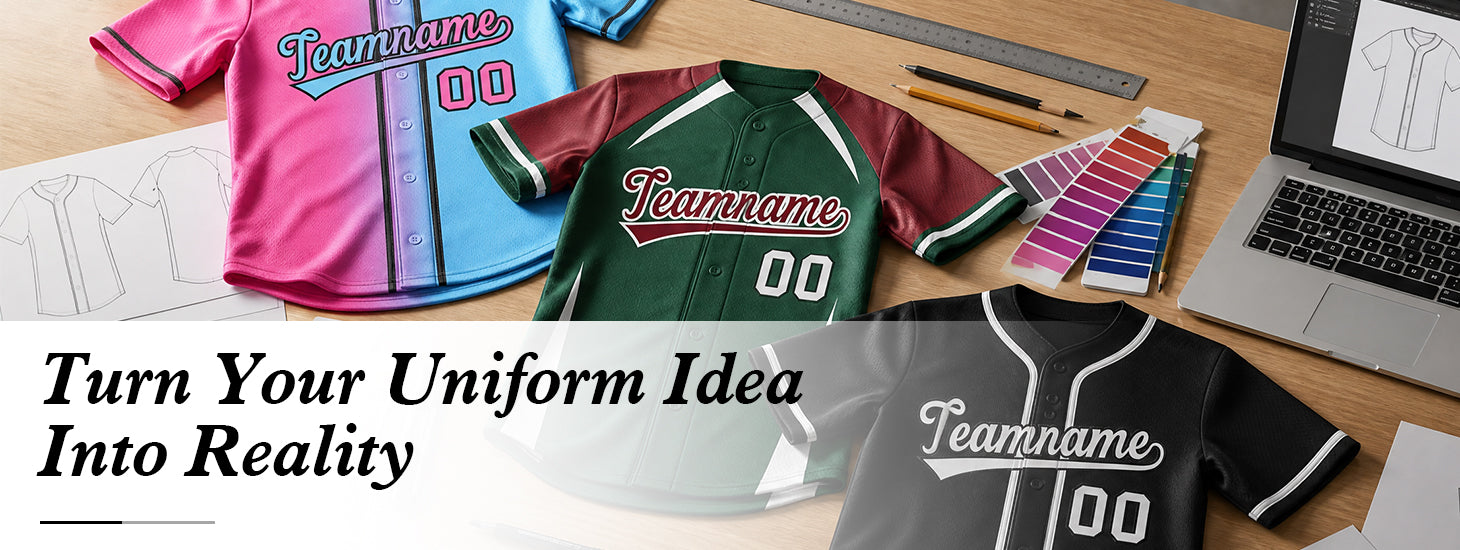

From Concept to Custom Jersey: How Designers Turn Your Vision Into Reality
Creating a custom jersey starts with an idea. This guide explains the design process step by step, from choosing the right sport template and decoration method to adding logos, names, and numbers. Discover how professional designers help transform your concept into a complete custom jersey mockup ready for production.
 Ice Cream